California's New Allergen Law: What Restaurant Owners Need to Know
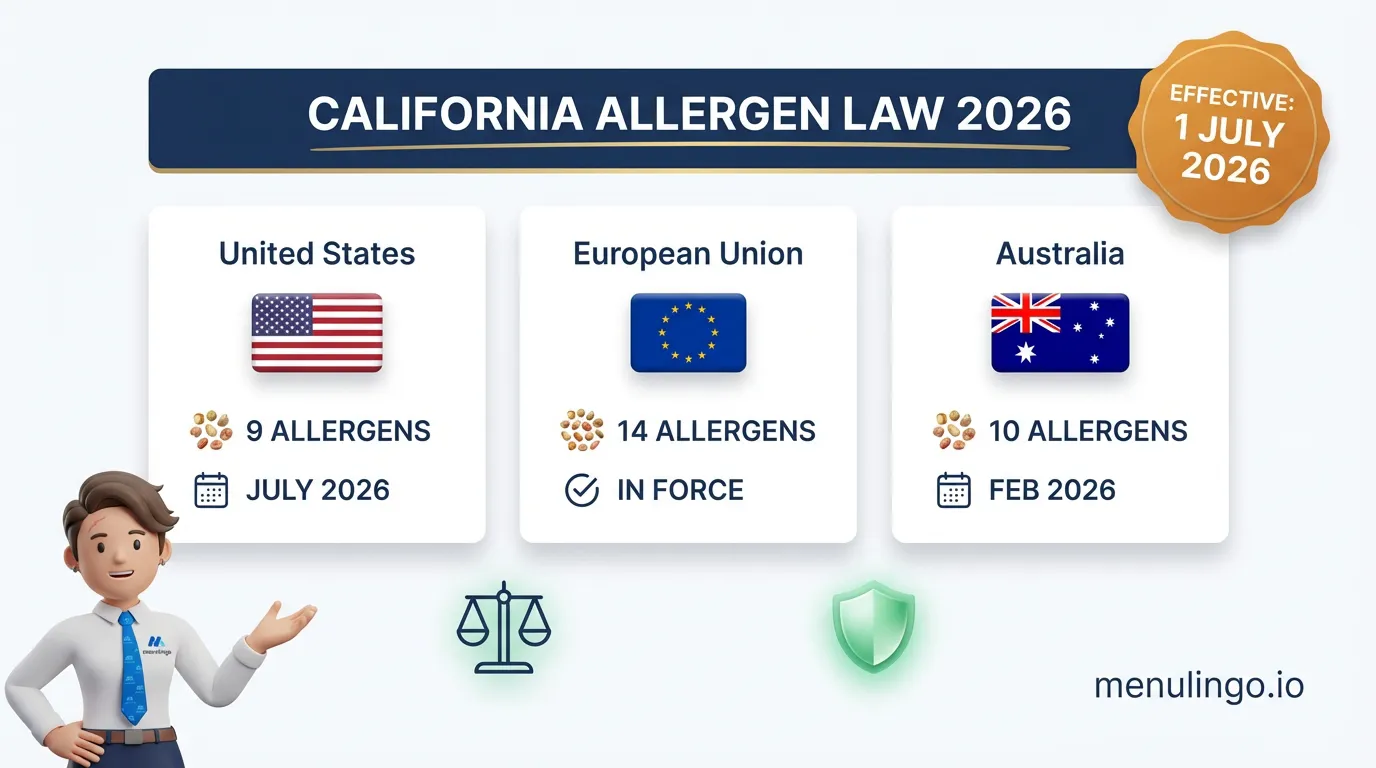
On 1 July 2026, California's new allergen disclosure law comes into effect. It's the most significant food allergen regulation to hit the US restaurant industry in years, and while it currently targets chain restaurants, the direction of travel is clear — allergen disclosure requirements are expanding.
Who Does It Affect?
The law applies to chain restaurants with 20 or more locations operating under the same brand. This includes fast-food chains, casual dining franchises, and multi-location restaurant groups. Independent restaurants with fewer than 20 locations are not currently required to comply, but many are choosing to adopt the same standards voluntarily.
The 20-location threshold is measured across all US states, not just California. A restaurant group with 15 locations in California and 5 in Nevada would be covered.
What's Required?
Affected restaurants must identify the presence of nine major allergens in every menu item:
Milk, eggs, fish, shellfish, tree nuts, peanuts, wheat, soybeans, and sesame. These nine allergens account for the vast majority of serious food allergy reactions in the United States.
The allergen information must be available in writing — either on the physical menu, on a digital menu, or in a document that can be provided to the diner upon request. Verbal-only disclosure is not sufficient.
How Is This Different from Federal Requirements?
The Food Allergen Labeling and Consumer Protection Act (FALCPA) already requires allergen labelling on packaged foods sold in the US. But FALCPA doesn't cover restaurants. California's law extends allergen disclosure into the food service environment for the first time at a state level.
The Food and Drug Administration (FDA) has provided voluntary guidance for restaurants on allergen management, but California is now making specific requirements mandatory.
What Does Compliance Look Like in Practice?
For restaurants already using digital menu systems, compliance is relatively straightforward. Each menu item needs allergen tags linked to the nine specified allergens, and those tags need to be visible to the diner before ordering.
For restaurants using printed menus only, compliance means either reprinting menus with allergen symbols, creating a separate allergen guide document, or adding a digital option (such as a QR code linking to an allergen-aware menu).
The law doesn't prescribe a specific format. Allergen information can be displayed using text labels, standardised symbols, or a combination of both. The key requirement is that the information is accurate, available, and clear.
Penalties for Non-Compliance
While the specific penalty schedule is still being finalised by California's Department of Public Health, the law includes provisions for fines and enforcement action. More significantly, non-compliance creates legal liability — if a diner suffers an allergic reaction at a restaurant that failed to disclose a known allergen, the restaurant's exposure in a personal injury claim increases substantially.
The Broader Trend
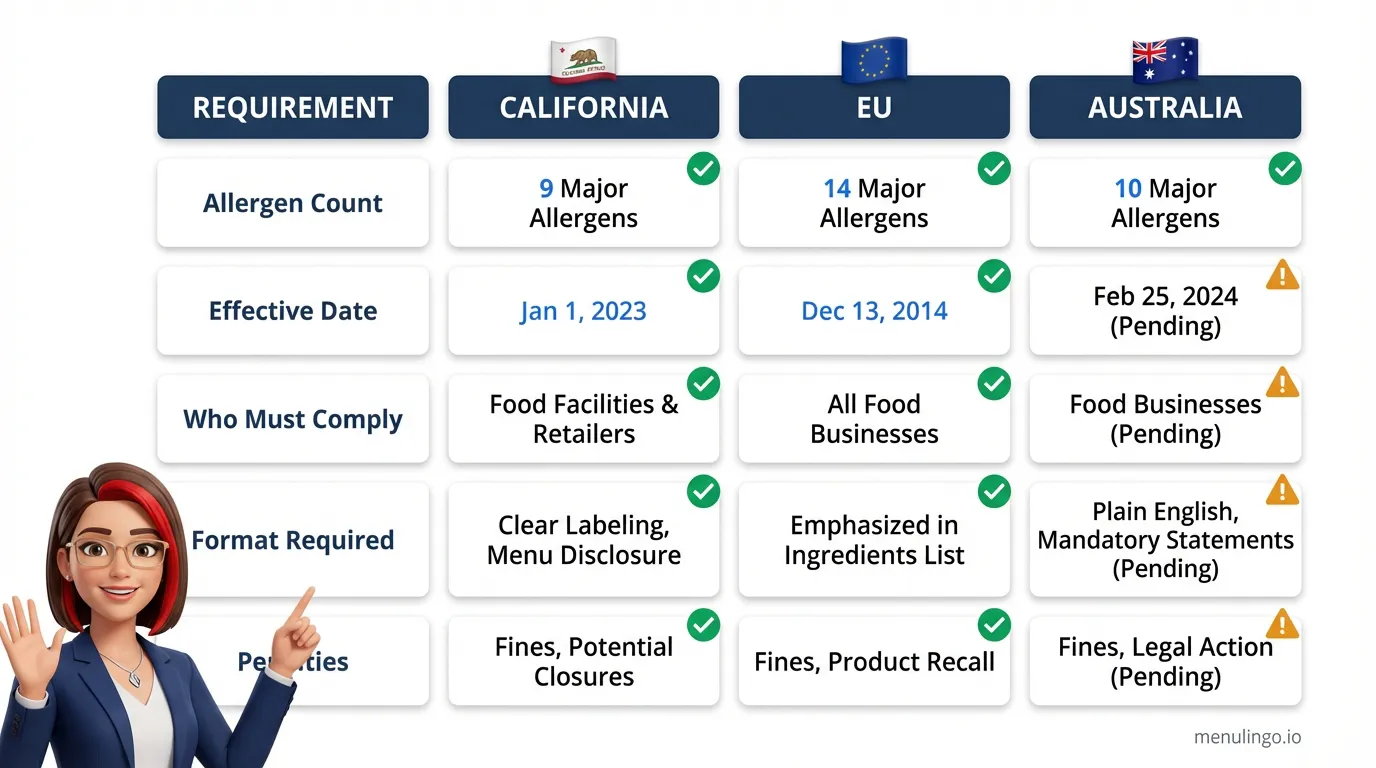
California's law doesn't exist in isolation. It follows a global pattern of expanding allergen disclosure requirements.
European Union: Regulation 1169/2011 has required written allergen disclosure for 14 major allergens in all EU food service establishments since 2014. This covers restaurants, cafés, takeaways, and catering — regardless of size.
Australia: The Plain English Allergen Labelling (PEAL) transition completed in February 2026, requiring clearer allergen identification using plain English terms on food labels. While PEAL primarily targets packaged foods, state food safety authorities are increasingly scrutinising restaurant allergen practices.
United Kingdom: Post-Brexit, the UK implemented Natasha's Law in 2021, requiring full ingredient and allergen labelling on all food prepared on-premises for direct sale.
Other US states are watching California's implementation closely. If the law proves effective, similar legislation in New York, Illinois, and other states is likely within 2–3 years.
What Should Restaurants Do Now?
Even if your restaurant isn't directly affected by California's law, preparing for allergen disclosure requirements makes sense. Here's a practical starting point.
Audit your menu. Go through every dish and identify which of the nine major allergens are present. Don't guess — check with your kitchen team and review actual recipes, including sauces, marinades, and garnishes.
Choose a disclosure method. Decide whether you'll add allergen information to your existing menu, create a separate document, or implement a digital solution. QR code menus with built-in allergen filtering give diners the best experience and are the easiest to keep up-to-date.
Train your staff. Make sure every front-of-house team member knows where allergen information is displayed and how to respond when a diner asks about specific allergens.
Document your process. Keep records of your allergen identification process. If a compliance question arises, having documentation of your approach demonstrates due diligence.
The Opportunity
Allergen compliance isn't just about avoiding fines. Restaurants that handle allergen information well attract a loyal customer base — diners with food allergies tend to return to restaurants where they feel safe, and they recommend those restaurants to others.
Clear allergen information also reduces kitchen errors, speeds up service (fewer verbal clarifications needed), and protects your business from legal risk. Compliance is the minimum. Doing it well is a competitive advantage. Use our digital menu compliance checklist to get started, or see pricing plans.
For a comprehensive look at allergen laws across the US, EU, UK, and Australia, see our Restaurant Allergen Compliance Guide.
Ready to make your menu multilingual?
Join restaurants already serving diners in 9 languages with accurate allergen information. 14-day free trial, no credit card required.
Start Your Free Trial