How AI Menu Translation Works (And Why It Beats Google Translate)
Restaurant menus are one of the hardest things to translate well. A dish name like "Barramundi on a bed of native pepperberry jus" doesn't have a direct equivalent in Mandarin or Japanese — it requires cultural context, culinary knowledge, and an understanding of what the diner actually needs to know.
That's where AI menu translation differs from generic tools like Google Translate.
Why Generic Translation Fails for Menus
Google Translate handles everyday phrases reasonably well. But restaurant menus present unique challenges that generic translation tools consistently get wrong.
Culinary terminology is highly specialised. Words like "jus," "confit," "tartare," and "crudo" carry specific cooking techniques that need to be conveyed, not just translated. A word-for-word approach turns "duck confit" into something nonsensical in most languages.
Regional ingredients create another layer of difficulty. Australian native ingredients like finger lime, wattleseed, and bush tomato have no direct translation in most languages. The AI needs to provide a descriptive translation that helps the diner understand what they're ordering.
Cultural food references matter too. "Chicken parma" in Australia means something different from "chicken parmigiana" in Italy. The translation needs to reflect what the diner will actually receive on their plate.
How AI Menu Translation Actually Works
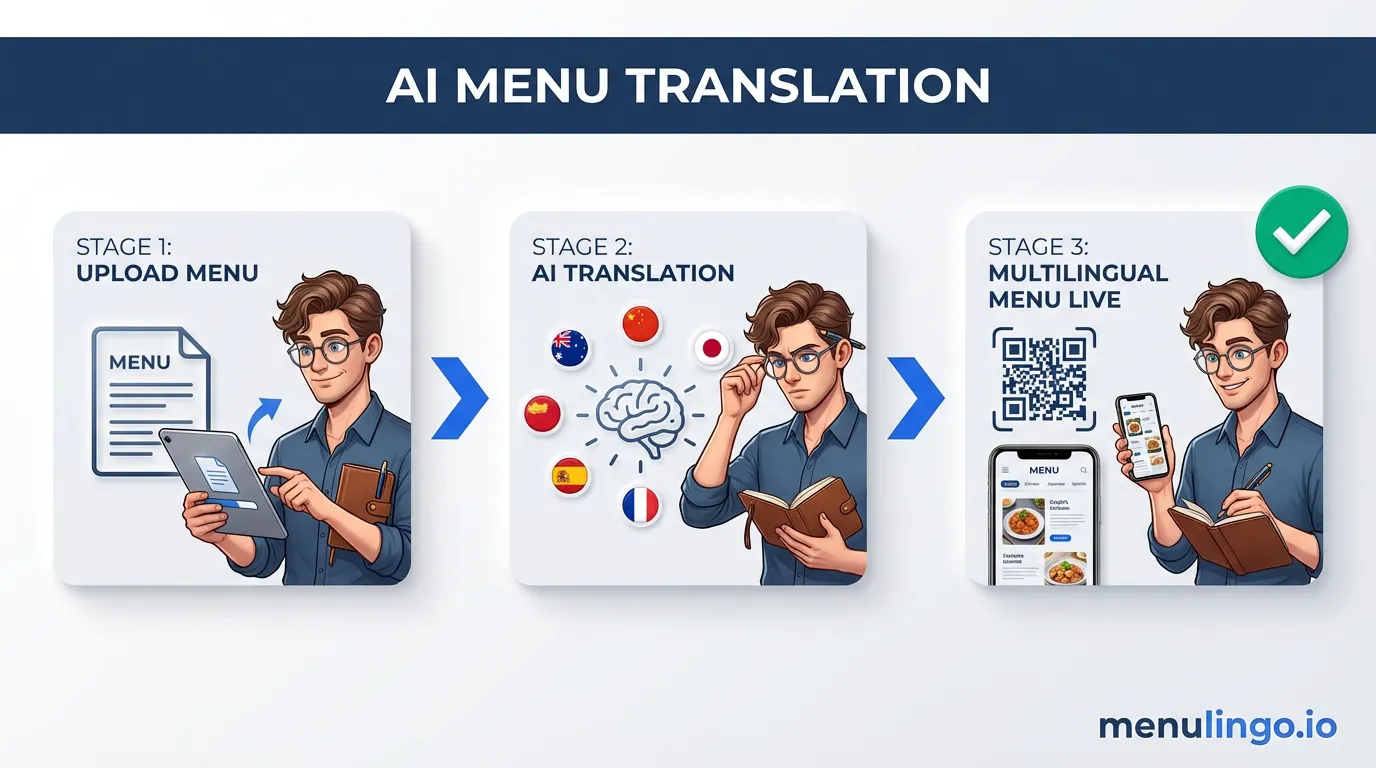
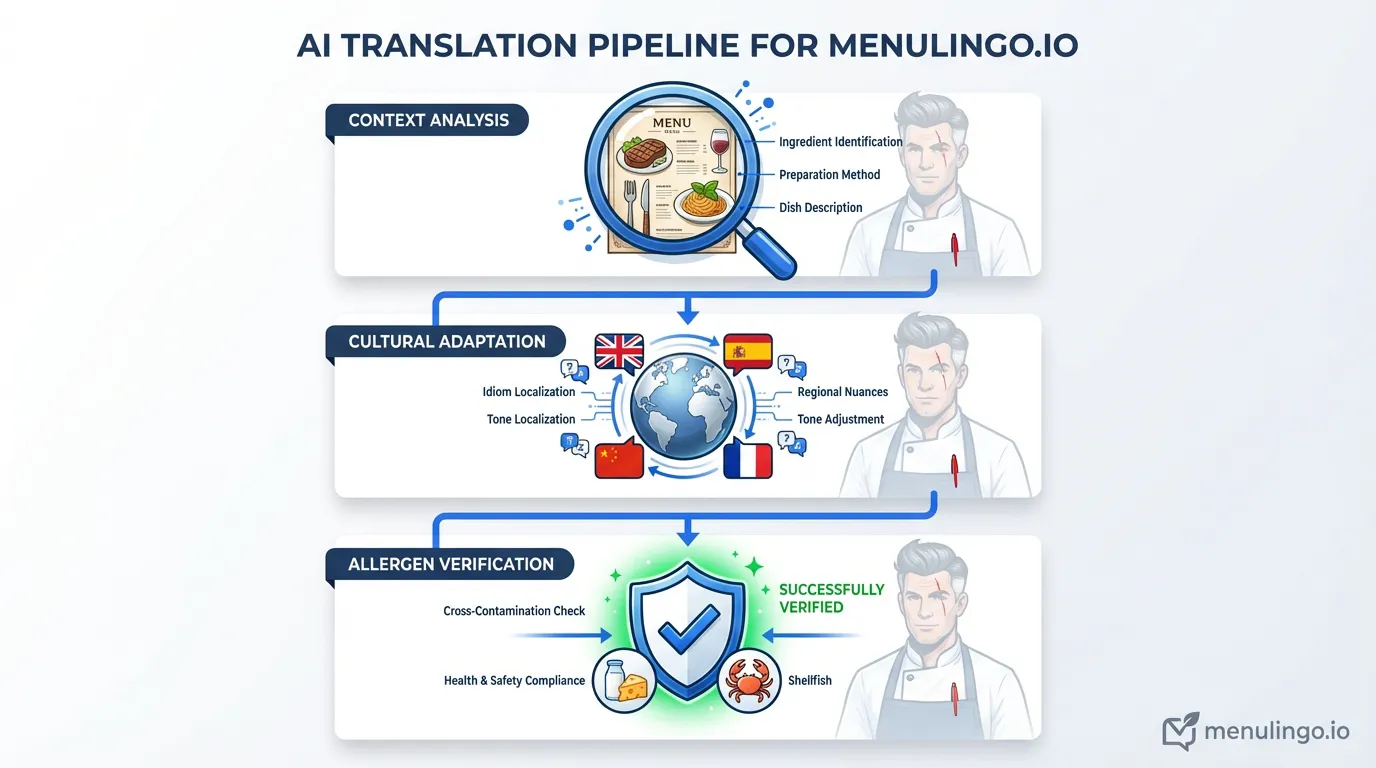
Modern AI translation for menus works in three stages, each building on the previous one.
Stage 1 — Understanding context. The AI reads the entire menu, not just individual items. It understands that "chips" on an Australian menu means hot chips (fries), not crisps. It recognises that "entrée" in Australia means starter, while in France it means main course. This contextual awareness prevents embarrassing mistranslations.
Stage 2 — Culturally appropriate translation. Rather than translating word-for-word, the AI produces translations that make sense to native speakers of each language. For a Mandarin Chinese translation, this might mean describing the cooking method and primary ingredients rather than attempting to transliterate an Australian dish name.
Stage 3 — Allergen preservation. This is critical. When translating a menu item, the AI ensures that allergen information is accurately conveyed in every language. If a dish contains tree nuts, that information must be clear whether the diner is reading in English, Japanese, or Spanish.
The English Variant Problem
Even within English, menus need localisation. An Australian menu listing "capsicum" needs to show "bell pepper" for American English speakers. "Prawns" becomes "shrimp." "Coriander" becomes "cilantro."
MenuLingo handles three English variants — Australian, American, and British — treating each as a distinct localisation rather than a full translation. The meaning stays the same, but the vocabulary matches what the diner expects.
What About Dishes That Don't Translate?
Some dish names shouldn't be translated at all. "Pad Thai" stays as "Pad Thai" in every language. "Sushi" remains "sushi." The AI recognises internationally recognised dish names and keeps them intact, adding a brief description in the target language where helpful.
For house specialties and creative dish names, the AI provides both the original name (for authenticity) and a descriptive translation so the diner knows what they're ordering.
Speed and Cost Compared to Human Translation
Professional human menu translation typically costs $150–400 per language and takes 3–7 business days. For a restaurant with 50 menu items needing translation into 5 languages, that's $750–2,000 and weeks of waiting.
AI translation processes the same menu in under 60 seconds across all languages, and the translations are cached — meaning they only need to be regenerated when the menu content actually changes.
The trade-off is that AI translation may occasionally miss a nuance that a specialist human translator would catch. That's why MenuLingo presents translations for owner review before publishing. The restaurant owner has the final say on every translation.
Getting Started
The practical outcome is straightforward: upload your menu once, and AI handles the rest. Every dish gets translated into the languages you choose, allergen information is preserved across every language, and your QR code menu serves the right language based on the diner's preference.
No more handwritten translations pinned to the wall. No more pointing and hoping. See how MenuLingo pricing works or start your free trial today.
Ready to make your menu multilingual?
Join restaurants already serving diners in 9 languages with accurate allergen information. 14-day free trial, no credit card required.
Start Your Free Trial