Menu Staleness: Why Outdated Menus Cost You Diners and Revenue
A restaurant's menu is a promise to the diner. It says: "These are the dishes we serve, these are the ingredients, and these are the allergens." When that promise is outdated, the consequences range from mild disappointment to genuine safety risk.
What Menu Staleness Looks Like
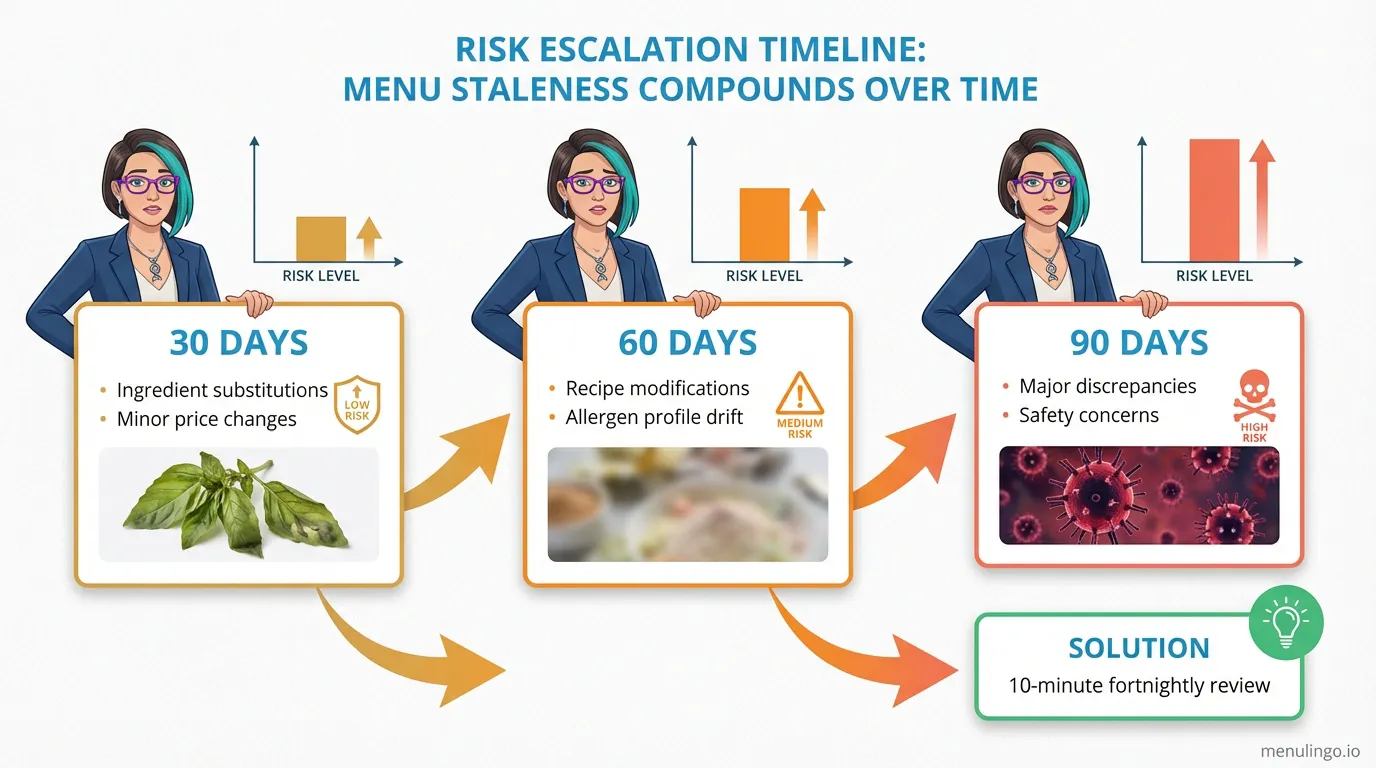
Menu staleness happens gradually. A seasonal ingredient becomes unavailable, so the kitchen substitutes something similar. A supplier changes their product, introducing a new allergen that isn't reflected on the menu. A price increases but the digital menu still shows the old figure.
None of these changes individually seem urgent. But they compound. After 60 or 90 days without a review, the gap between what the menu says and what the kitchen actually serves can be significant.
For diners with food allergies, that gap can be dangerous.
The Allergen Risk
When a recipe changes — even slightly — the allergen profile can change with it. Swapping one brand of soy sauce for another might introduce wheat. Replacing a cooking oil might introduce a nut allergen. Adding a new garnish might introduce sesame.
If the menu's allergen information doesn't reflect these changes, a diner relying on that information to make safe choices is working with incorrect data. This isn't a hypothetical scenario — allergen incidents from undocumented recipe changes are among the most common food safety issues in restaurants.
The Trust Problem
Diners notice when a menu doesn't match reality. When they order "pan-seared barramundi with fennel" and receive grilled salmon with greens, the experience is jarring. When they see a price on the menu that doesn't match the bill, trust erodes further.
For digital menus accessed via QR code, there's an additional trust factor. If the digital menu looks outdated or shows dishes the restaurant no longer serves, diners question whether the allergen information is current either. An outdated menu undermines the credibility of every piece of information it contains.
Why It Happens
Restaurant owners are busy. Updating the menu falls into the "important but not urgent" category — it never has a deadline, so it's constantly deprioritised in favour of more pressing operational tasks.
Printed menus make this worse because updating requires reprinting. The friction of reprinting encourages procrastination. Digital menus remove this friction — updating a dish description takes minutes — but the menu still needs someone to initiate the update.
Staleness Monitoring
The most effective approach to menu freshness is automated monitoring. Rather than relying on memory or intention, a staleness monitoring system tracks when the menu was last confirmed and sends reminders at set intervals.
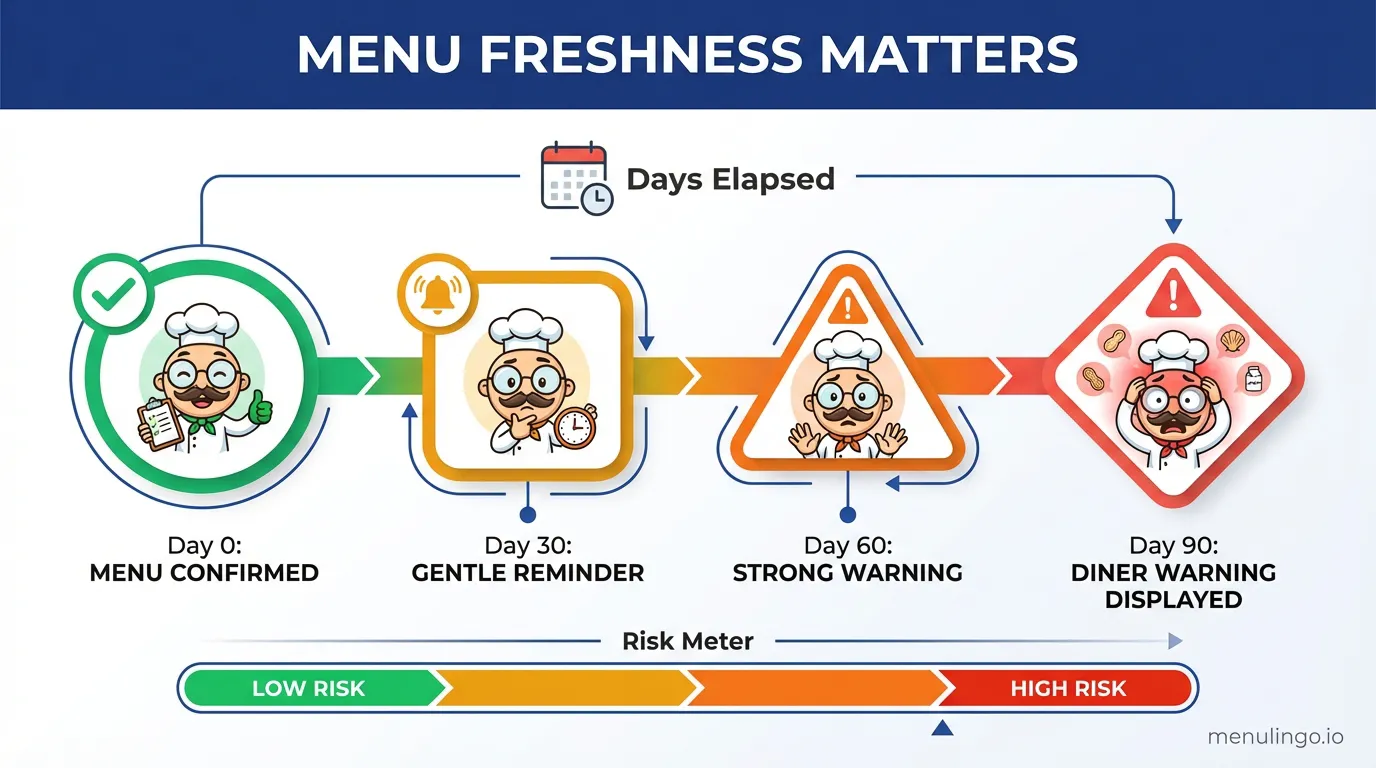
A practical escalation sequence works like this: at 30 days since the last review, a gentle reminder to check the menu. At 60 days, a stronger prompt. At 90 days, a warning that appears on the diner-facing menu itself, letting diners know the menu may not reflect current offerings.
This escalation creates accountability. The 30-day reminder is easy to dismiss, but the prospect of a visible warning on the diner's screen motivates action before the 90-day mark.
Quick-Confirm vs Full Review
Not every menu review needs to be a full audit. Sometimes the menu genuinely hasn't changed — the dishes, ingredients, prices, and allergens are all current. In those cases, a "quick confirm" option that lets the owner verify "nothing has changed" resets the staleness clock without requiring a full edit session.
When changes have occurred, the review should touch every affected item — updating descriptions, prices, allergen profiles, and translations. The key is that someone with kitchen knowledge actively confirms the menu's accuracy, rather than assuming it's still correct.
The Revenue Connection
An outdated menu doesn't just create safety risk — it costs revenue. Dishes listed on the menu but no longer available lead to disappointed diners and awkward conversations. Seasonal specials that aren't on the menu don't get ordered. Price discrepancies create billing friction that sours the dining experience.
Restaurants that keep their menus current and accurate see higher average spend, fewer complaints, and better reviews. The menu is often the diner's first impression of the restaurant — making sure it's accurate and inviting is one of the simplest ways to improve the dining experience.
A Simple Routine
Set a fortnightly calendar reminder to review your menu. Spend 10 minutes confirming that every dish is available, every description is accurate, every allergen profile reflects current recipes, and every price matches what you're charging.
Ten minutes every two weeks. That's all it takes to keep your menu fresh, your allergens accurate, and your diners confident in what they're ordering.
MenuLingo's built-in staleness monitoring reminds you when it's time to review. Use our compliance checklist to audit your menu, or start your free trial.
Ready to make your menu multilingual?
Join restaurants already serving diners in 9 languages with accurate allergen information. 14-day free trial, no credit card required.
Start Your Free Trial