The Real Cost of Allergen Mistakes in Restaurants
When a diner with a tree nut allergy receives a dish containing cashews, the immediate cost is obvious — a returned meal and a remade dish. But the true cost of that single allergen mistake runs far deeper than the price of ingredients.
The Direct Financial Cost
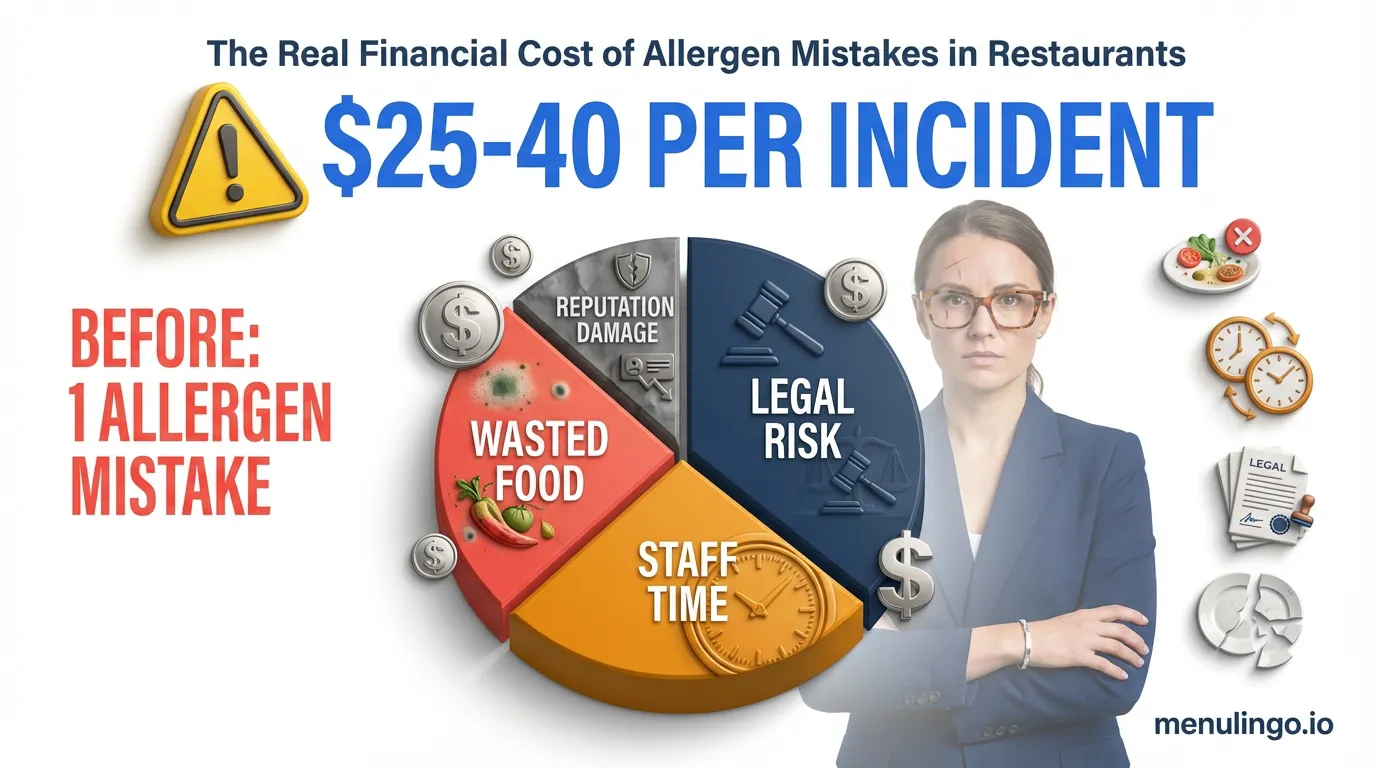
The average returned meal costs a restaurant between $25 and $40 when you factor in wasted food, kitchen time to prepare a replacement, and the delay to service flow. For a busy restaurant handling 200 covers on a Friday night, even two allergen-related returns can cost $80 in direct losses.
But returned meals are the best-case scenario. The worst case involves an ambulance, a lawsuit, and a news headline.
Legal Liability Is Growing
Allergen disclosure laws are tightening globally. In Australia, the Plain English Allergen Labelling (PEAL) regulations completed their transition period in February 2026, requiring clearer allergen identification on all food labels. The European Union's Regulation 1169/2011 already mandates written allergen disclosure for 14 major allergens in every food service establishment. In the United States, California's new allergen law takes effect on 1 July 2026, requiring chain restaurants with 20 or more locations to disclose nine major allergens on menus.
Restaurants that fail to meet these requirements face fines, enforcement action, and — in cases where a diner suffers a serious allergic reaction — personal injury litigation. The legal costs of defending an allergen-related claim can reach tens of thousands of dollars, regardless of the outcome.
The Review Damage Multiplier
A diner who has a bad allergen experience doesn't just leave unhappy. They leave a review. And that review doesn't disappear.
Research consistently shows that one negative review about food safety can deter dozens of potential diners. When the review specifically mentions an allergic reaction, the impact is amplified — prospective diners with allergies (and their families) will actively avoid the restaurant.
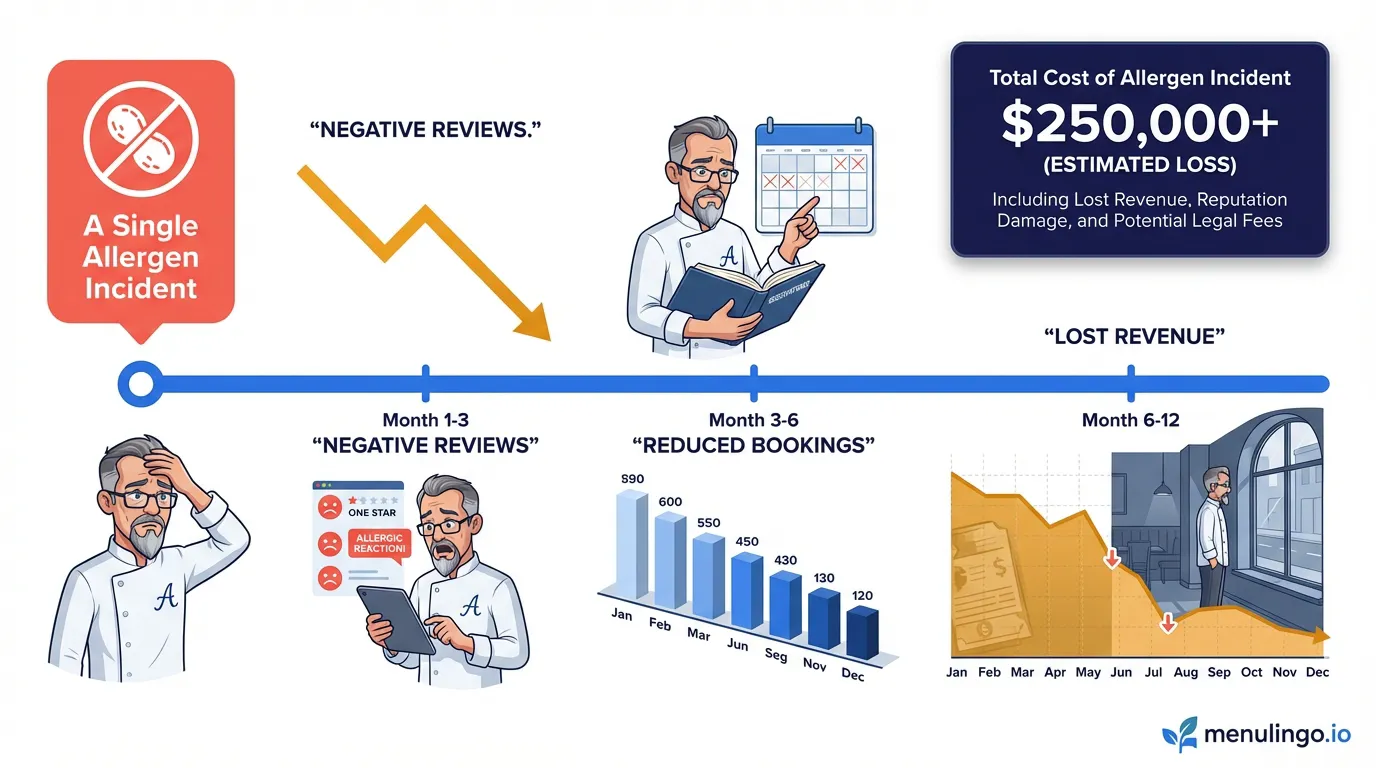
For a restaurant relying on tourist traffic, where diners make decisions based entirely on online reviews, a single allergen-related negative review during peak season can cost thousands in lost bookings.
The Communication Gap
Many allergen mistakes aren't caused by carelessness in the kitchen. They're caused by poor communication between the diner and the restaurant.
When a menu is only available in English and the diner speaks Mandarin, they can't communicate their dietary requirements effectively. This is exactly the problem that multilingual digital menus solve. When allergen information isn't clearly displayed, the diner may not know to ask. When the waiter is busy and the question gets lost, the kitchen doesn't get the message.
This communication gap widens dramatically with international tourists. A Japanese tourist with a shellfish allergy can't read an English-only allergen list. A French family with a child who has a dairy allergy needs to see "produits laitiers" — not just the English word "dairy."
Staff Training Costs
Training every staff member to handle allergen enquiries correctly is expensive and ongoing. Staff turnover in hospitality is among the highest of any industry — in Australia, annual turnover rates in food service can exceed 70%. Every new hire needs allergen training, and that training needs regular refreshing.
Even well-trained staff make mistakes under pressure. A Friday night rush with a 45-minute wait and a fully booked dining room is not the ideal environment for careful allergen communication.
The Insurance Impact
Restaurants with allergen incidents on record can face higher public liability insurance premiums. Insurers track claims history, and a pattern of allergen-related incidents signals increased risk. Some insurers now ask specifically about allergen management procedures during the quoting process.
What Prevention Actually Costs
Compare the cost of an allergen mistake with the cost of prevention. A digital menu system with built-in allergen detection and multilingual display costs less than the price of a single returned meal per month. Clear, accurate allergen information in every language your diners speak eliminates the communication gap entirely.
The maths is straightforward: preventing one allergen incident per month saves more than the cost of the tools that prevent it. Everything beyond that first prevented incident is pure upside — fewer returns, better reviews, lower legal risk, and happier diners.
Taking Action
The restaurants that handle allergens well share a common trait: they don't rely on memory or verbal communication. They have systems — clear, visible, up-to-date allergen information that the diner can read in their own language, before they order.
That's not just good compliance. It's good business. See MenuLingo pricing or start your free trial.
Ready to make your menu multilingual?
Join restaurants already serving diners in 9 languages with accurate allergen information. 14-day free trial, no credit card required.
Start Your Free Trial