How to Serve International Tourists Without Language Barriers
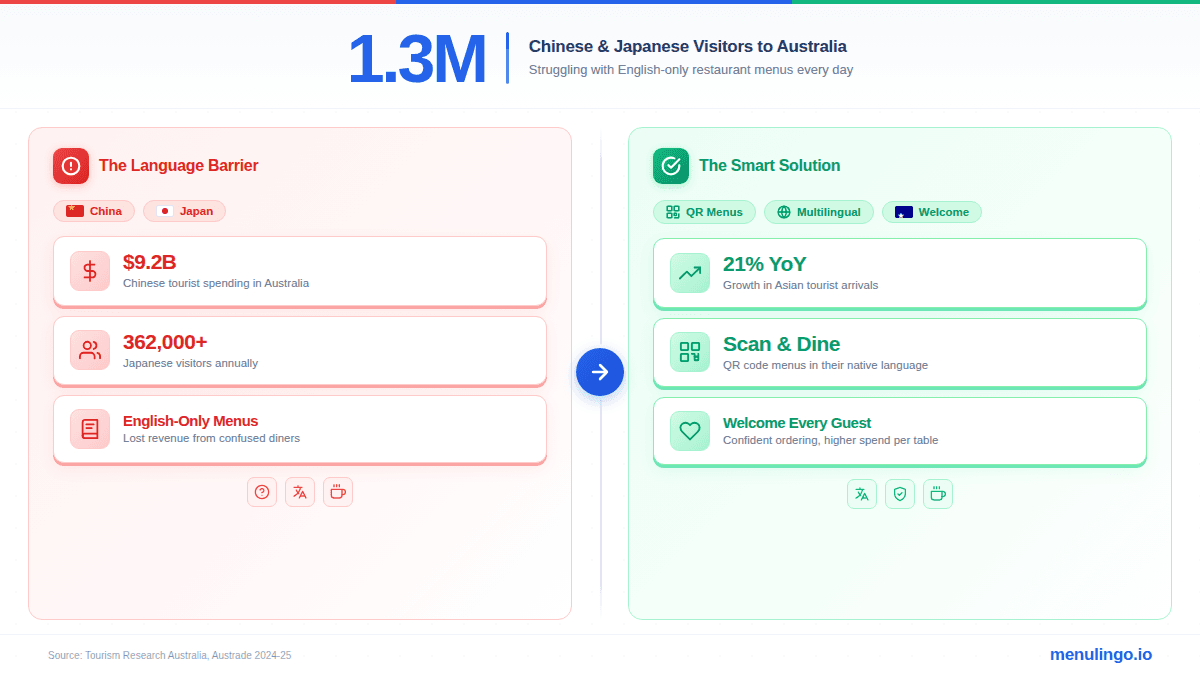
International tourism to Australia reached record levels in 2025, with visitors from China, Japan, South Korea, India, and Europe making up the fastest-growing segments. For restaurants in tourist areas, these visitors represent significant revenue — but only if they can actually engage with your menu.
The Revenue You're Leaving on the Table
When international tourists can't read a menu, three things happen. They order less (defaulting to safe, familiar items). They skip courses (dessert and drinks are the first to go when ordering feels difficult). And they leave quickly — turning a potential 90-minute dining experience into a 40-minute transaction.
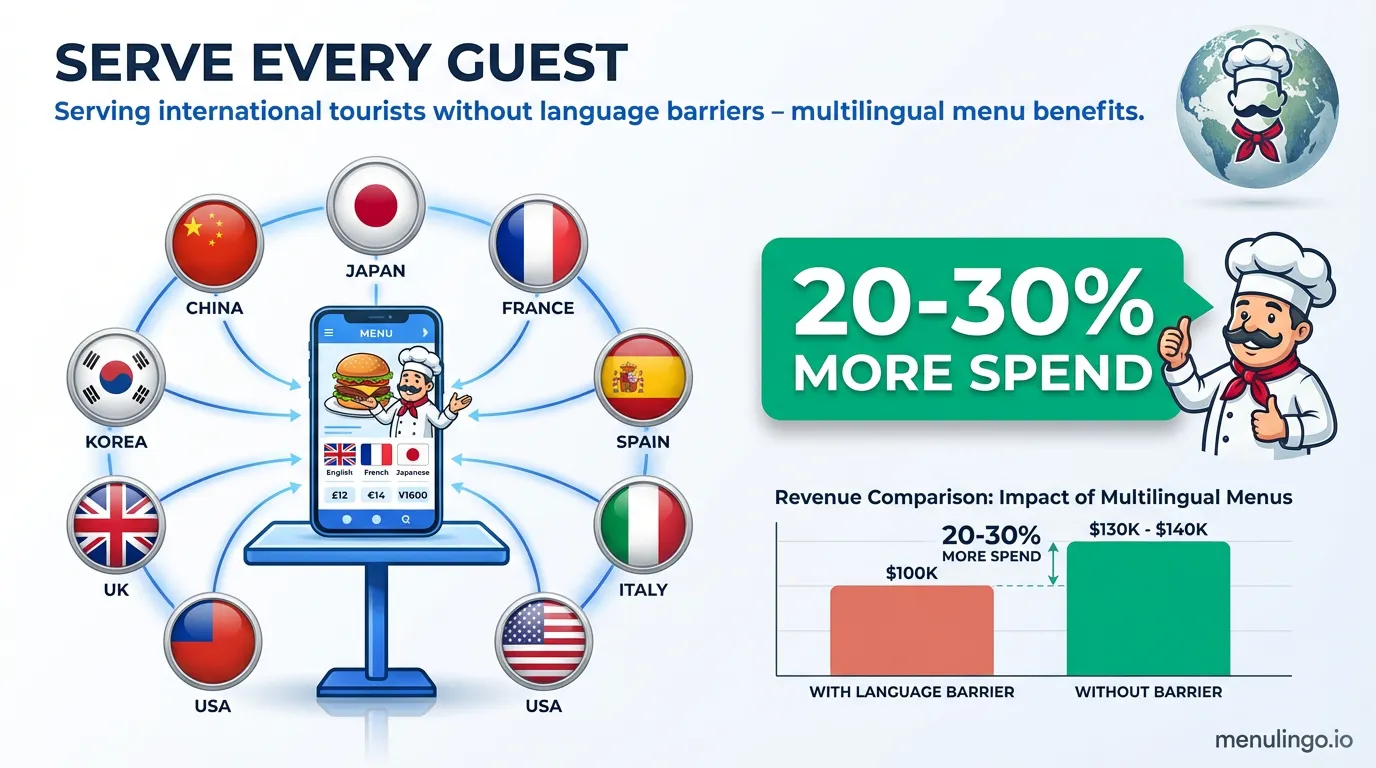
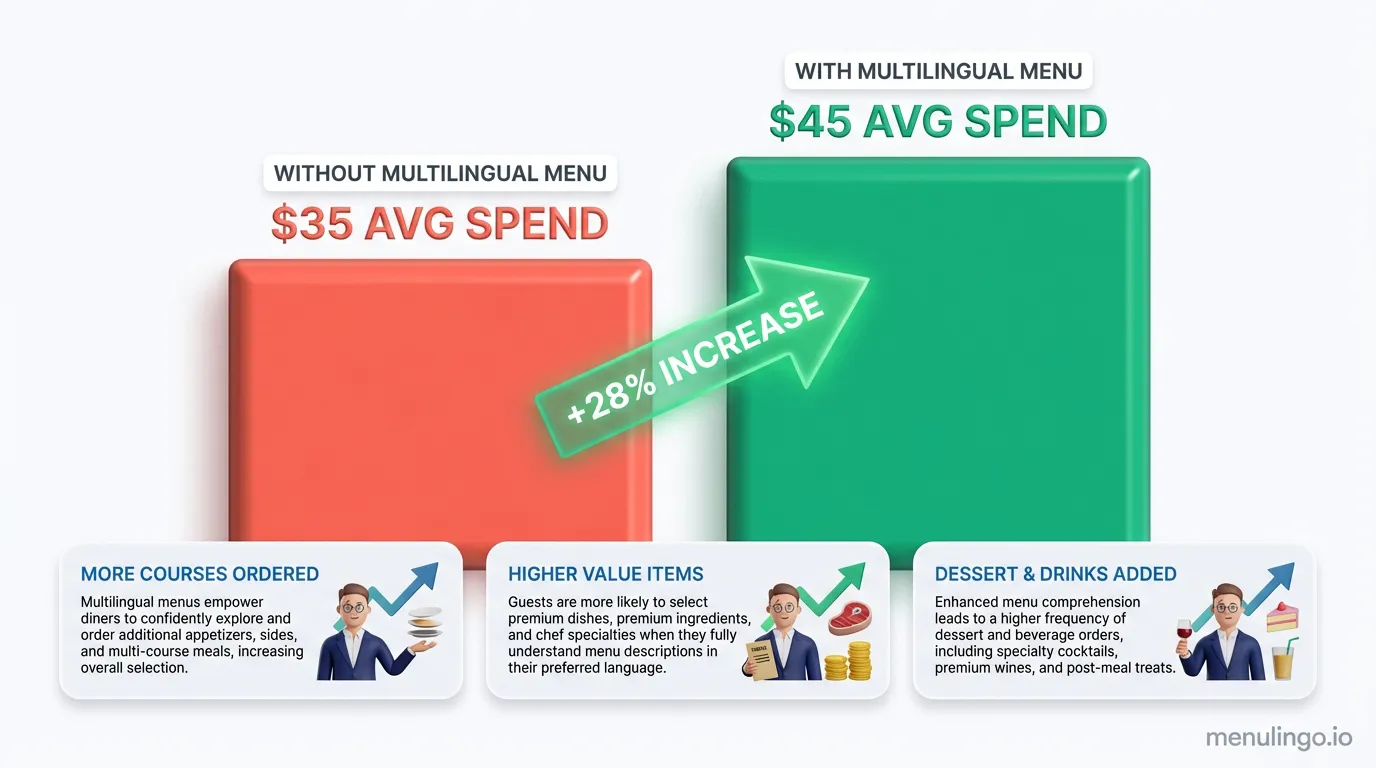
Studies in the hospitality sector consistently show that diners who can fully understand a menu spend 20-30% more than those navigating a language barrier. For a restaurant doing 50 tourist covers per day at an average $45 per head, that gap represents $450-675 in lost daily revenue.
Over a tourism season, the numbers add up fast.
What International Diners Actually Need
The language barrier isn't just about translating dish names. International diners need three things from your menu.
Understanding what they're ordering. This means more than the dish name — it means ingredients, cooking method, and portion context. "Chicken parma" means nothing to a tourist from Shanghai. "Crumbed chicken breast with tomato sauce, melted cheese, and chips" tells them exactly what they'll receive.
Allergen safety in their language. A Japanese tourist with a shellfish allergy can't navigate English allergen information. They need to see the word for shellfish in Japanese and know which dishes are safe. This isn't a convenience — it's a health and safety requirement.
Confidence to explore the menu. When diners can read every dish description, they're more likely to try the chef's special, order a glass of wine, add a side dish, or stay for dessert. Each of these additions increases the average spend per cover.
Practical Strategies That Work
QR code menus with language switching. The single most effective tool for serving international diners. The tourist scans the same QR code as a local diner and sees the menu in their language. No separate printed menus, no staff translation, no pointing at pictures on other tables.
Language-aware greeting. Train your host to ask "Which language do you prefer?" and direct tourists to the QR code menu. A simple gesture toward the QR code on the table, combined with "menu in Chinese" or "menu in Japanese," sets the right expectation immediately.
Visual menu elements. Where possible, include images of signature dishes. Visual references complement written translations and help diners make decisions faster. This is especially effective for culturally specific dishes that don't have direct equivalents.
Top language identification. Know which languages your tourist diners speak most. Check your QR code analytics for language preferences, or simply track the nationalities you see most often. Focus your translation efforts on the top 3-5 languages first.
The Review Effect
International tourists are prolific reviewers. Google Maps, TripAdvisor, and local review platforms (like Dianping for Chinese tourists or Tabelog for Japanese diners) are where future tourists make their restaurant decisions.
A restaurant that provides a great multilingual experience gets reviews that specifically mention the welcoming service for international guests. These reviews attract more international diners, creating a positive feedback loop.
Conversely, a restaurant where tourists feel confused or unwelcome gets reviews that warn other travellers away. In tourist-heavy areas, a few negative reviews from international visitors during high season can suppress bookings for months.
Staff Tips for Cross-Cultural Service
Even with a multilingual digital menu, a few staff practices make a significant difference.
Pace the service. Many international dining cultures operate at a different pace. Japanese and Chinese diners may appreciate a faster service flow, while European diners often prefer a more leisurely experience. Watch for cues rather than applying a one-size-fits-all approach.
Be specific with allergen enquiries. When a diner asks about allergens in a language you don't share, use the digital menu to show them the allergen information in their language. Don't rely on gestures — food allergies are too important for miscommunication.
Don't assume dietary preferences. Not all diners from a particular country eat the same way. Religious, cultural, and personal dietary requirements vary widely within any nationality. Let the individual diner tell you (or filter through the menu system) what they need.
Making the Investment
The cost of implementing a multilingual menu system is modest compared to the revenue opportunity. A digital menu platform with 9 languages costs less per month than a single tourist dinner. The return on investment typically appears within the first week of operation in a tourist-heavy location.
For restaurants already seeing international visitors, the question isn't whether multilingual menus are worth it. It's how much revenue you've been losing without them.
Learn how AI menu translation works, or view pricing plans and start your free trial.
Ready to make your menu multilingual?
Join restaurants already serving diners in 9 languages with accurate allergen information. 14-day free trial, no credit card required.
Start Your Free Trial